Going off-grid in a van is not about one big purchase. It is about a small set of components working together so that your fridge stays cold, your phone stays charged, and you do not have to drive to a campsite every other night just to top up. Get the foundations right and you can park up almost anywhere and live comfortably for days.
Below are 10 off-grid essentials I would build a van power and comfort system around, with specific Amazon picks that fit each job. The images in this post are AI-generated scene illustrations. We may earn a commission if you buy through our links. See our affiliate disclosure.
1. LiFePO4 leisure battery
The lithium iron phosphate (LiFePO4) battery is the heart of a modern off-grid van. Compared to old lead-acid leisure batteries, it gives you roughly twice the usable capacity for the same weight, charges much faster, and lasts thousands of cycles instead of a few hundred.
For most builds, 100Ah to 300Ah is the sweet spot depending on whether you run a fridge, an inverter, and how often you actually move the van. Pick a battery with a built-in BMS (battery management system) and Bluetooth monitoring if you can.
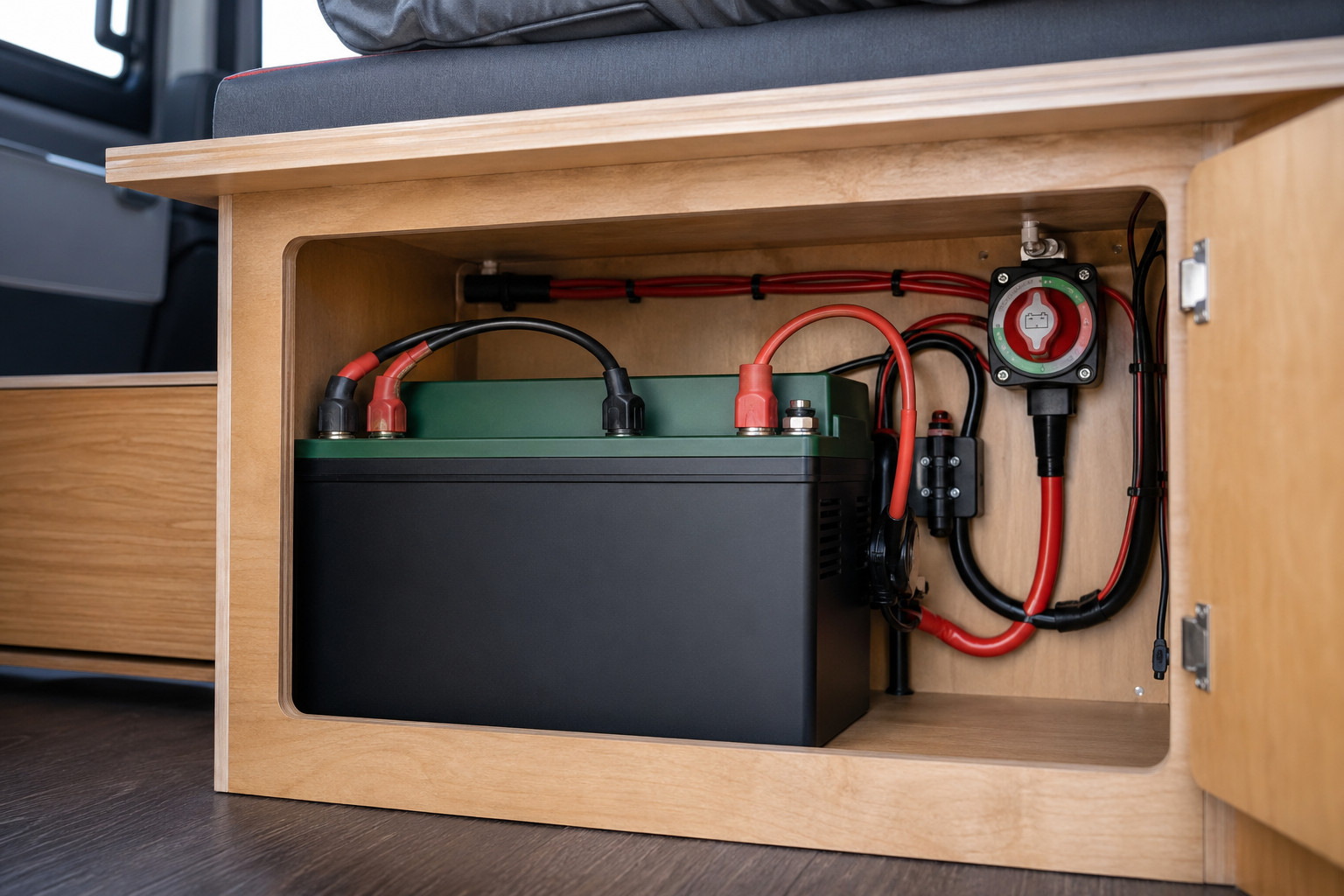
Pick: Renogy 100Ah LiFePO4 Lithium Battery — a popular starting point for van builds, with a built-in BMS and a long cycle life that pays back over years of use. Check price →
2. Rooftop solar panels
Solar is what turns a battery bank into a true off-grid system. Even on cloudy days, a decent rooftop array will keep a fridge running and slowly top up the battery without you doing anything. On sunny days, it will fully recharge the system while you walk the dog.
Aim for as much wattage as your roof and budget allow — most builds end up between 200W and 500W. Rigid monocrystalline panels last longer and produce more power per square foot than flexible ones, but flexible panels suit curved roofs and lower-profile builds.
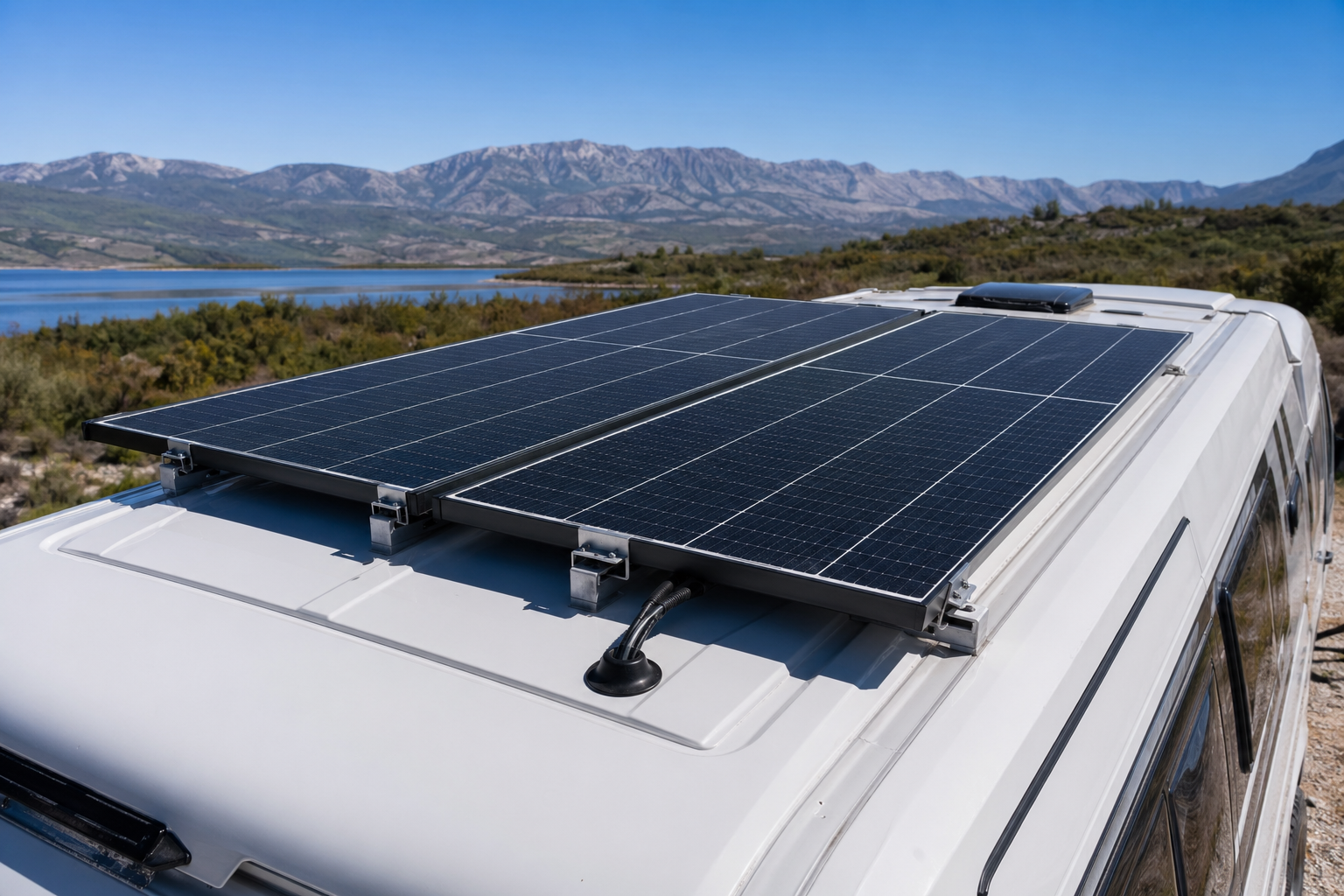
Pick: Renogy 100W Monocrystalline Solar Panel — efficient, durable, and easy to combine into a 200W or 400W rooftop array using standard mounting brackets. Check price →
3. MPPT solar charge controller
A solar panel cannot connect directly to a lithium battery — it needs a charge controller in between. An MPPT (Maximum Power Point Tracking) controller squeezes 20–30% more usable energy out of the same panels compared to a cheaper PWM unit, especially in cold or partial-shade conditions.
Match the controller to your panel voltage and total wattage, and pick one with a Bluetooth app so you can see exactly how much your solar is producing throughout the day.
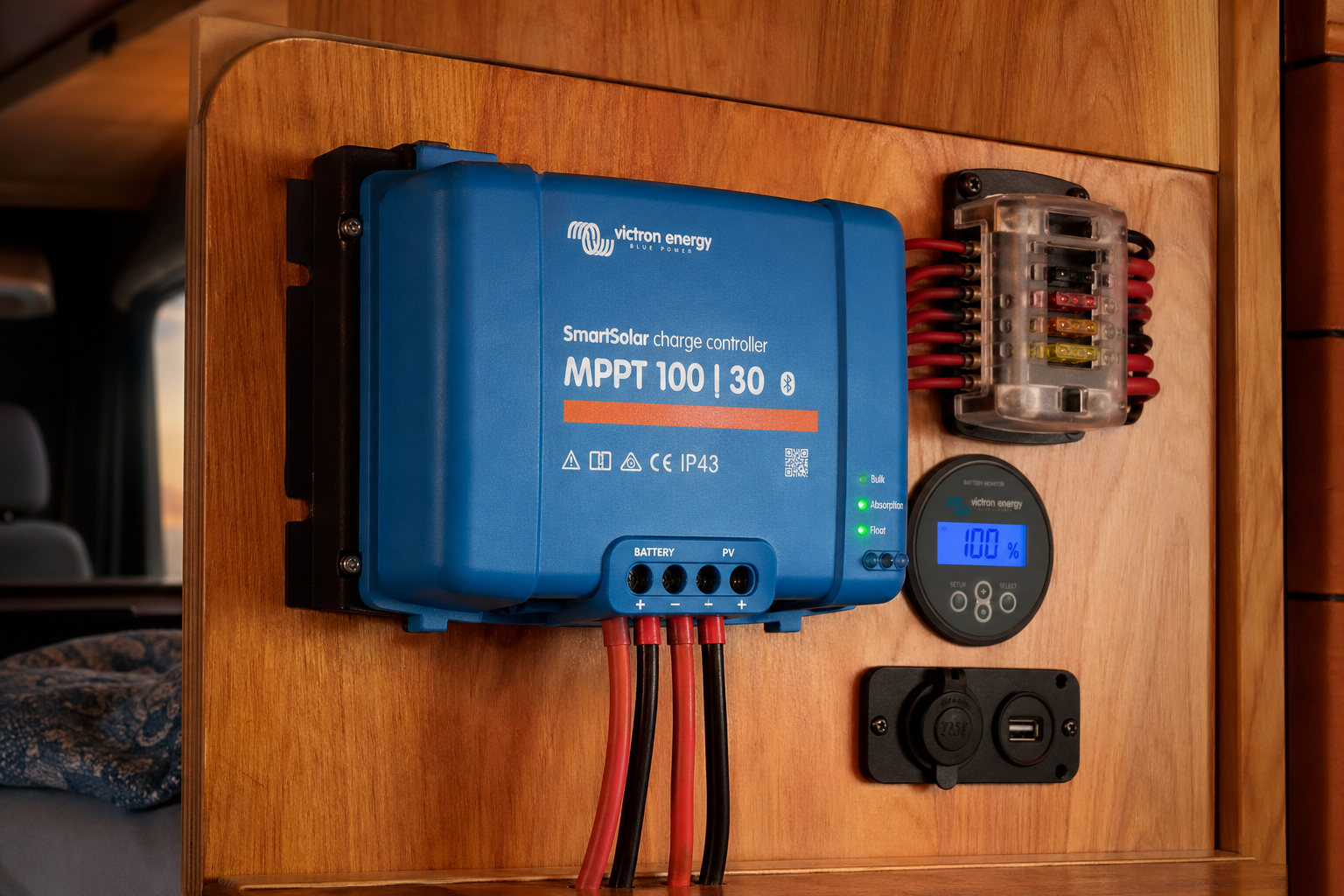
Pick: Victron SmartSolar MPPT Charge Controller — the de facto standard in van life for reliability and live monitoring through the VictronConnect app. Check price →
4. DC-DC battery-to-battery charger
Solar is brilliant in summer, but in winter or on overcast weeks you will want a second way to charge the leisure battery. A DC-DC (or B2B) charger uses the van’s alternator to safely top up your lithium battery while you drive, isolating it from the starter battery so neither system gets damaged.
This is also the bit that lets you charge a lithium leisure battery from a Euro 6 vehicle with a “smart” alternator — those alternators do not behave well with old-style split charge relays.
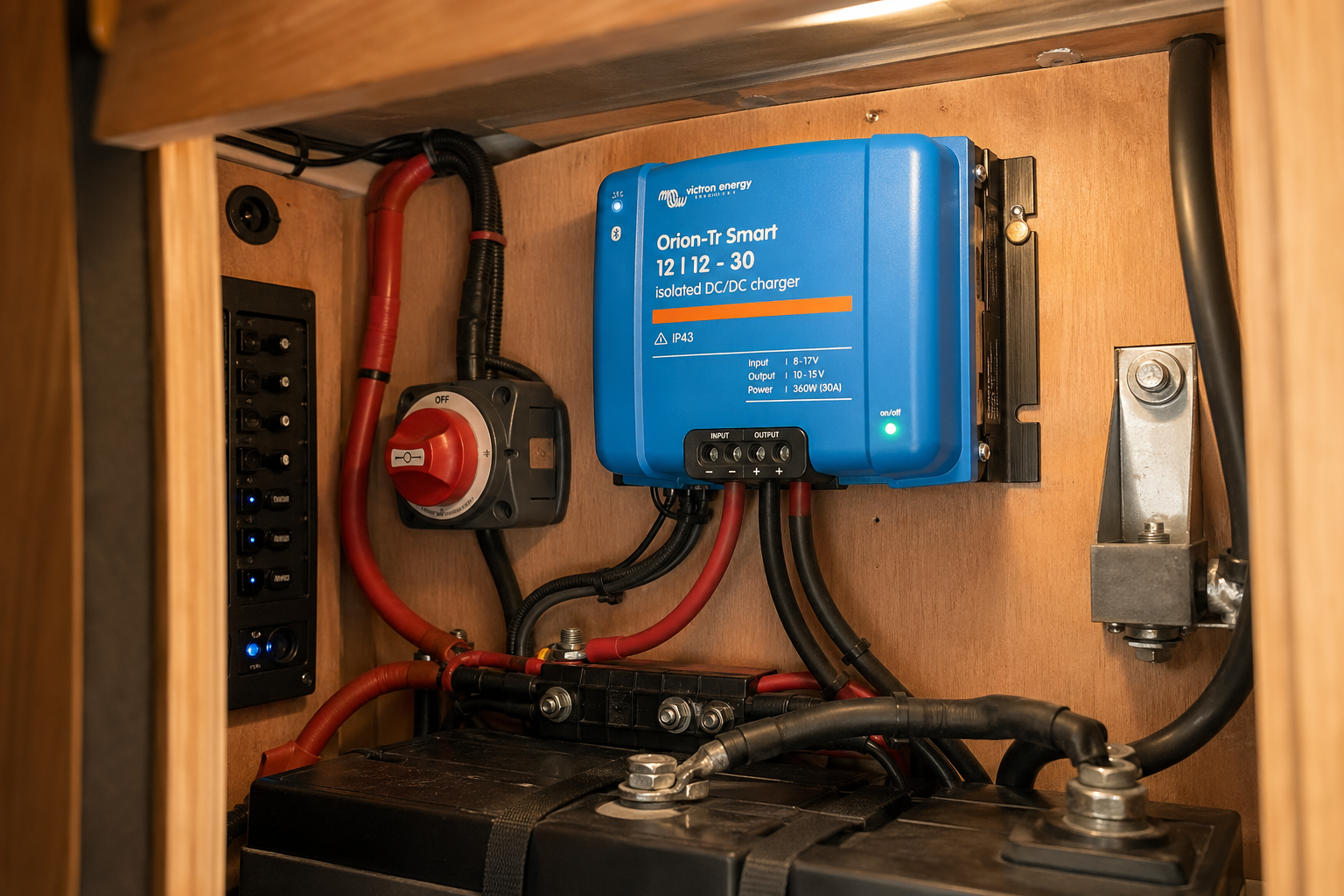
Pick: Victron Orion-Tr Smart DC-DC Charger — pairs cleanly with a LiFePO4 battery and modern smart alternators, so driving days become charging days. Check price →
5. Pure sine wave inverter
Most van life devices run happily on 12V, but laptops, induction hobs, hair dryers, and power tools still need 230V (or 110V) AC. A pure sine wave inverter converts your battery’s DC into clean AC power so sensitive electronics run without humming, overheating, or dying early.
Size the inverter to your biggest realistic load. A 1000W–2000W unit handles most van setups; only go higher if you want induction cooking or heavy power tools off the battery.
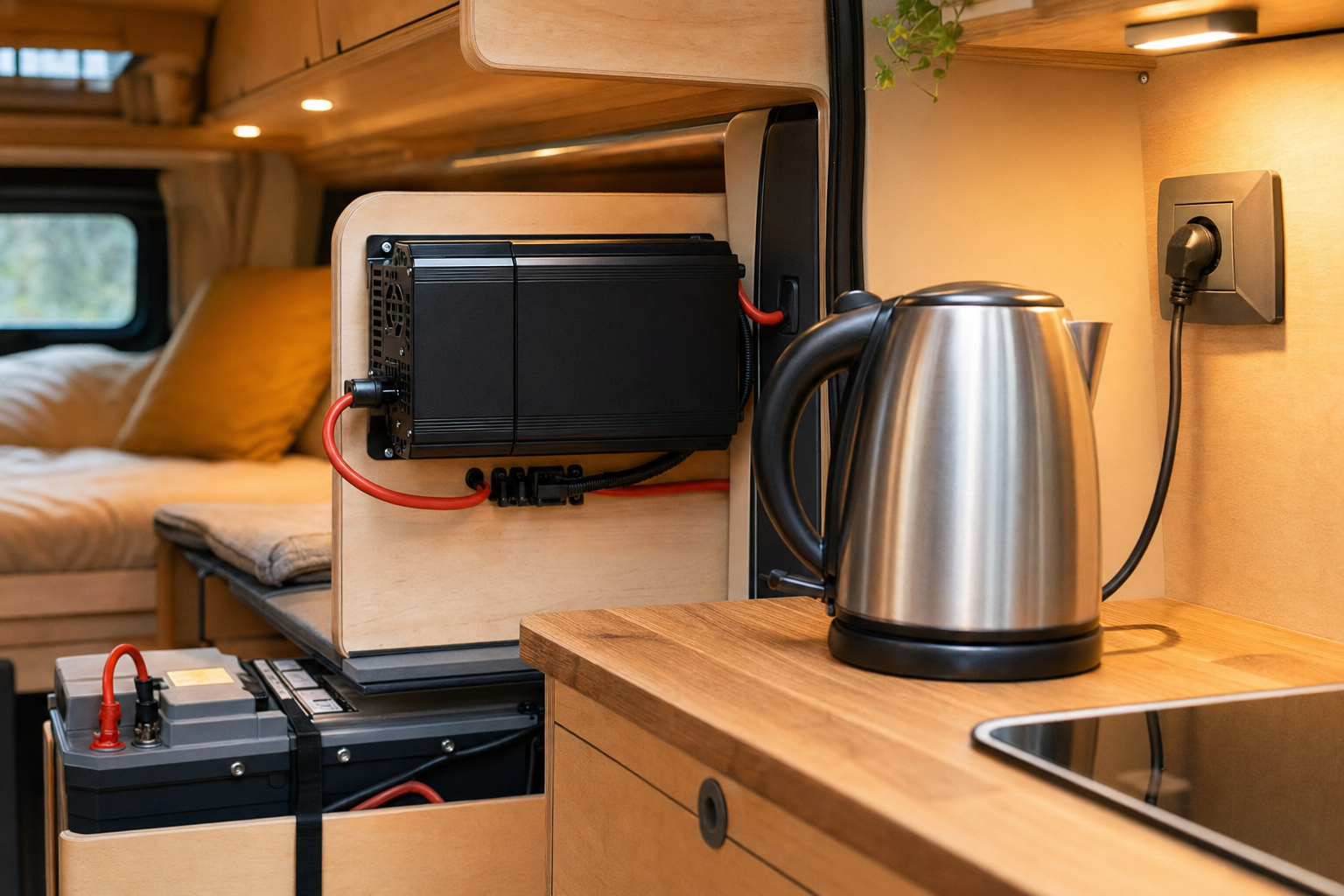
Pick: Renogy 2000W Pure Sine Wave Inverter — enough headroom for laptops, kettles and small appliances, with clean power that is safe for sensitive electronics. Check price →
6. Battery monitor with shunt
Without a proper monitor, you are guessing at battery state of charge from voltage alone — which is unreliable on lithium because the voltage curve is so flat. A shunt-based battery monitor measures every amp going in and out of the battery, so you always know exactly how full it is and how long it will last at the current draw.
This single component prevents more “stranded with a dead battery” stories than almost anything else in a van build.
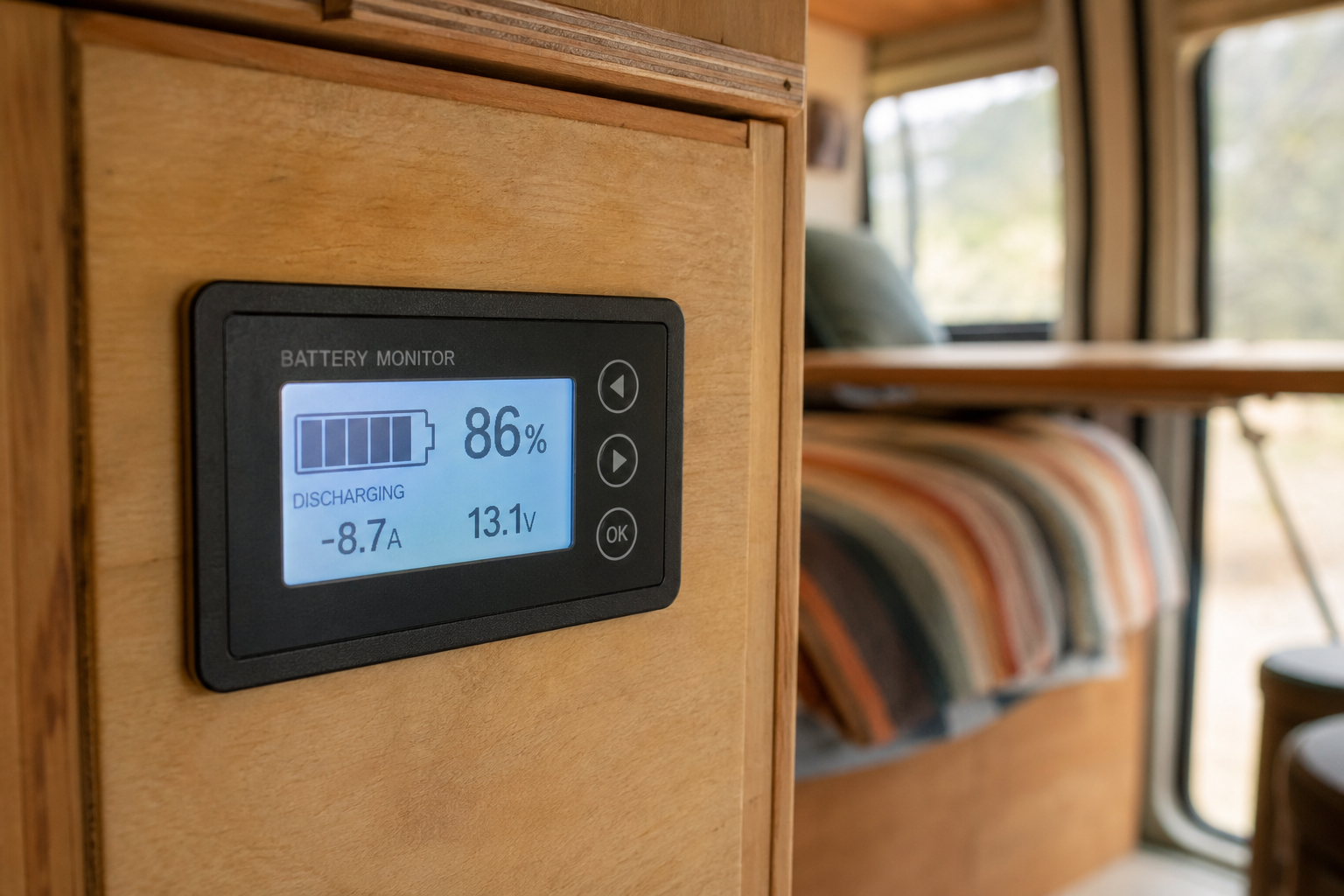
Pick: Victron SmartShunt Battery Monitor — gives you accurate state of charge on your phone via Bluetooth, no separate display needed. Check price →
7. Fuse block and circuit protection
Every circuit in your van — fridge, lights, water pump, USB sockets, fan — should be fused close to the battery. Fuses are not optional in a 12V system; they are what stops a chafed wire or a short circuit turning into a fire. A proper fuse block keeps everything tidy, labelled, and easy to diagnose when something stops working.
Buy a block with more positions than you think you need. Vans always grow more circuits over time.
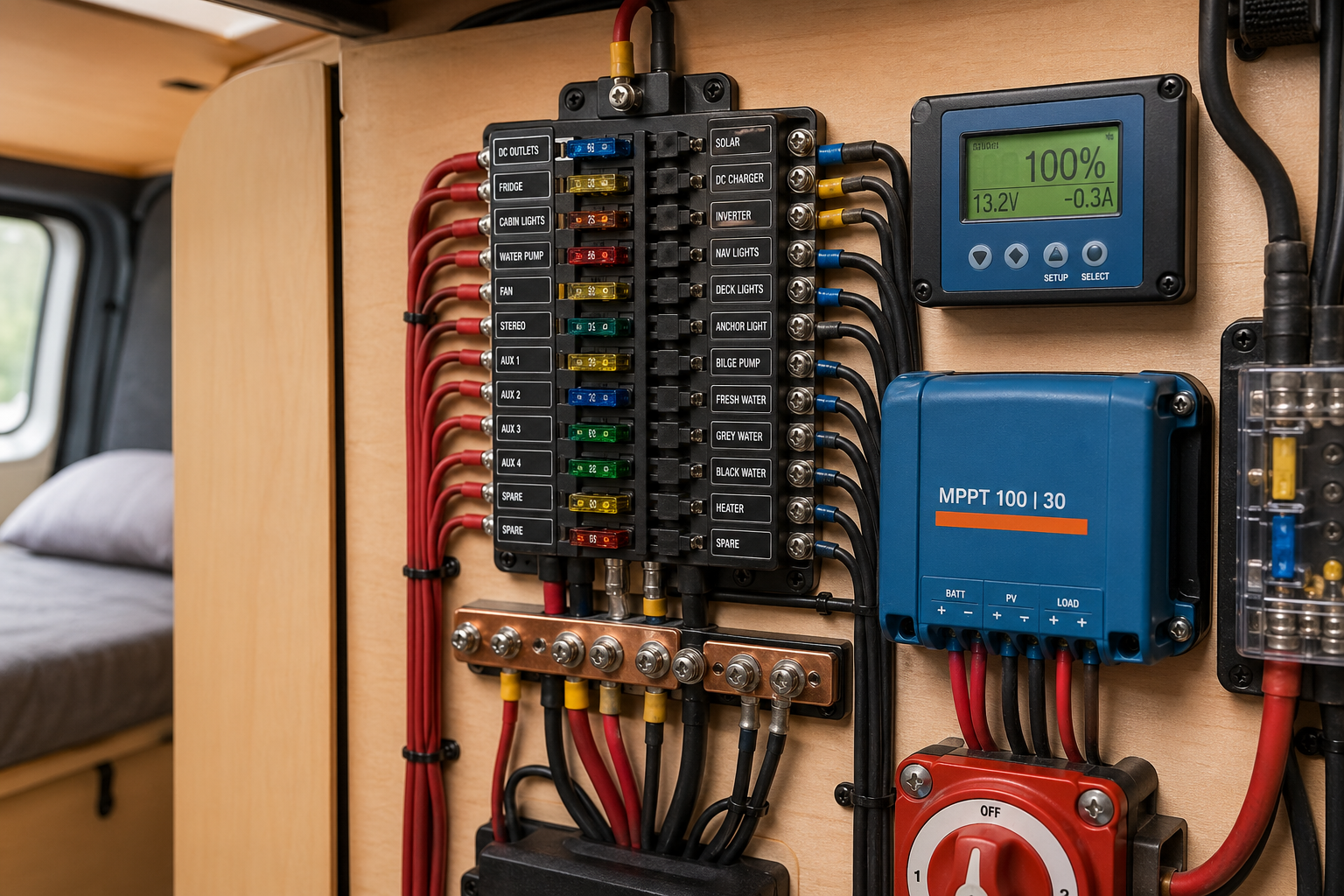
Pick: Blue Sea Systems ST Blade Fuse Block — a tidy, well-built fuse block that is the standard in marine and van builds for protecting 12V circuits. Check price →
8. 12V compressor fridge
A 12V compressor fridge is one of the biggest quality-of-life upgrades in an off-grid van. Unlike a 3-way absorption fridge, a compressor unit cools efficiently regardless of outside temperature and uses surprisingly little power — typically 30–50Ah over 24 hours, well within reach of a modest solar setup.
Look for a model with a separate freezer compartment if you cook from frozen, and check the cabinet dimensions carefully against your build before buying.
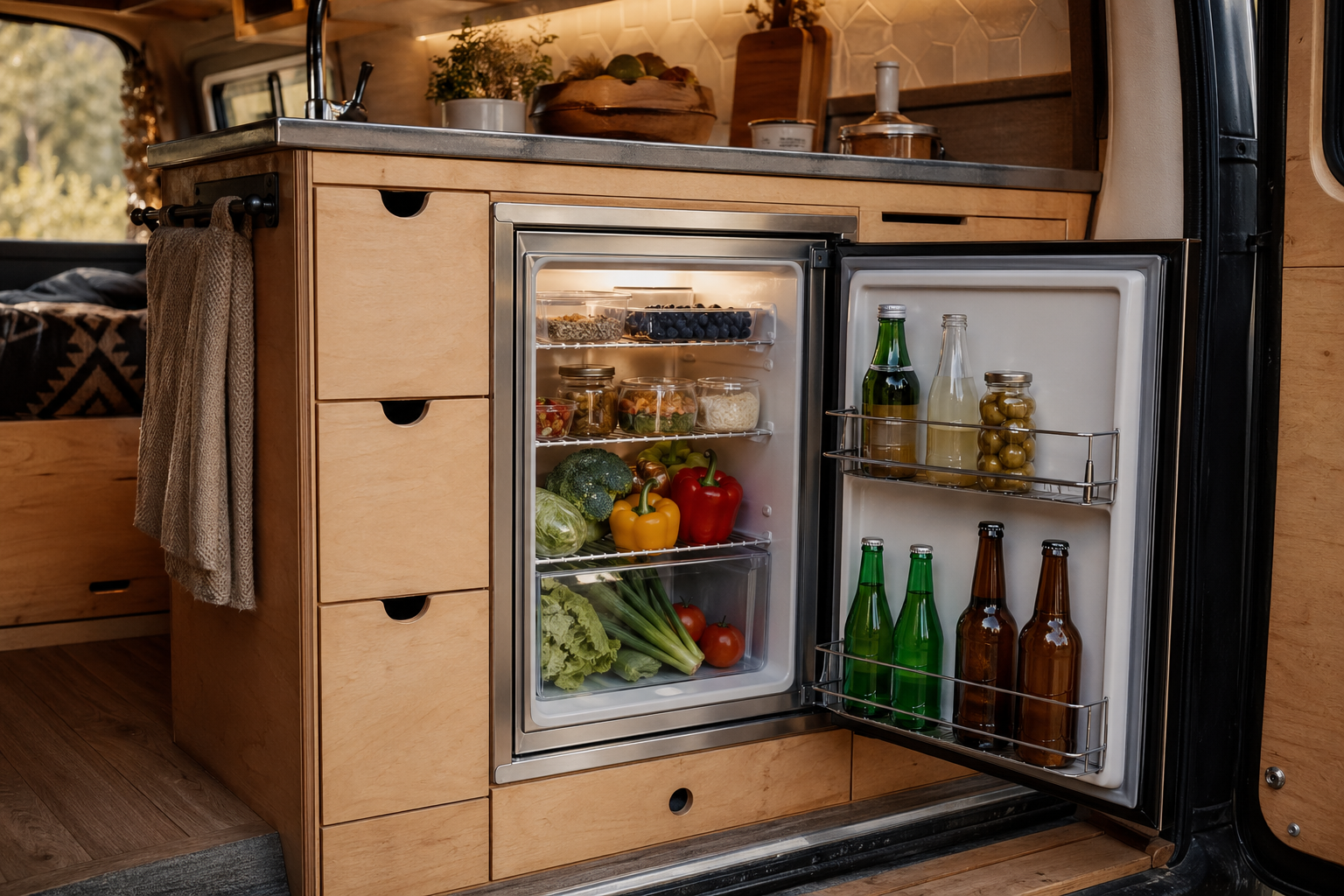
Pick: Dometic CFX3 12V Compressor Fridge Freezer — efficient, well-insulated and built to handle the vibration and temperature swings of life on the road. Check price →
9. Diesel heater
Cold nights are the fastest way to make off-grid van life feel miserable. A 12V diesel heater pulls fuel from a small tank or from the van’s main diesel tank, draws very little battery power, and pushes warm dry air through the van — which also massively reduces condensation compared to gas heaters or running the engine.
Most off-the-shelf 2kW units are more than enough for a long-wheelbase van. Get it installed properly with the exhaust routed safely outside, and use a carbon monoxide alarm regardless.
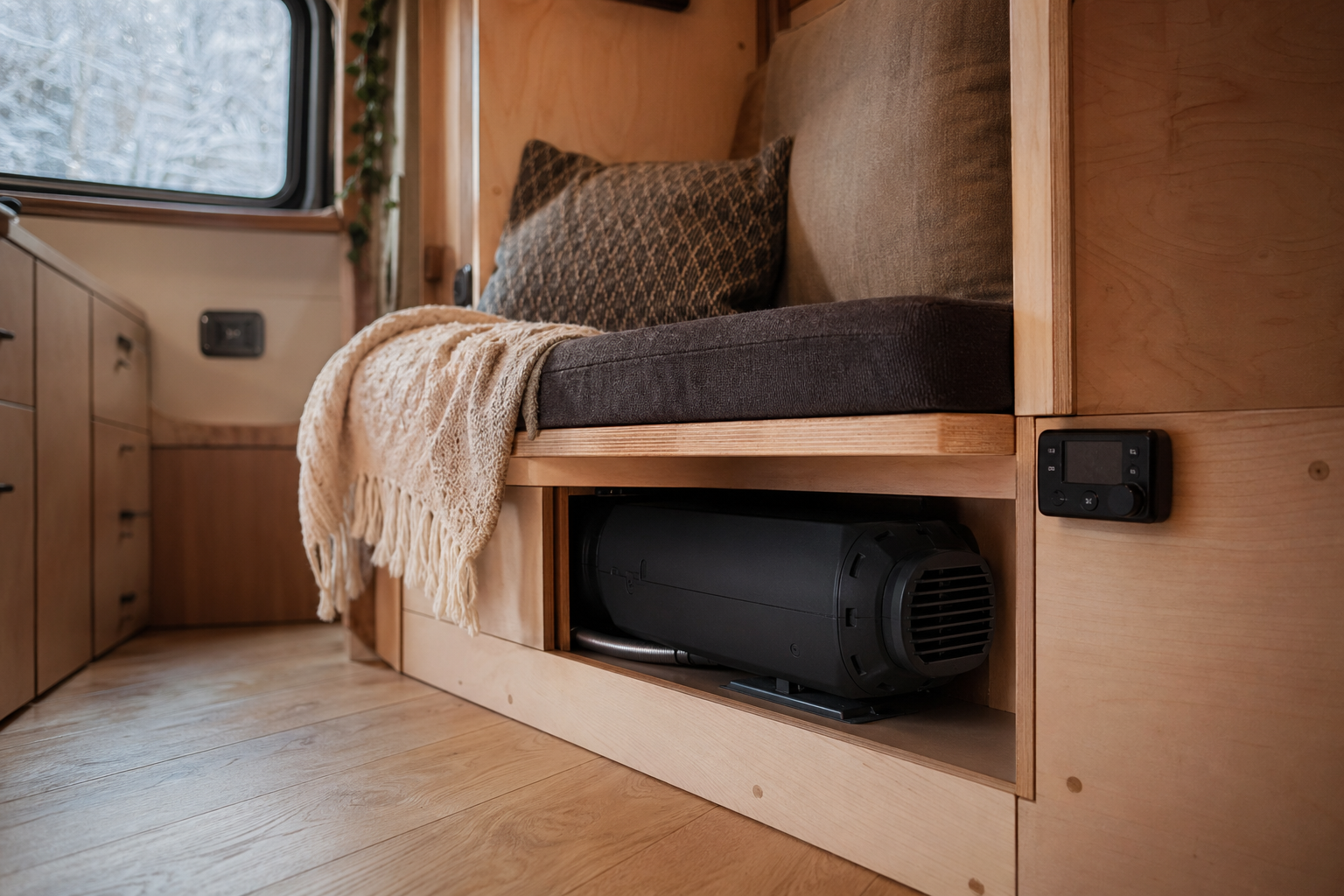
Pick: Vevor 2kW 12V Diesel Air Heater — affordable, surprisingly capable, and a popular DIY install for off-grid van builds that need real winter heat. Check price →
10. Portable power station for backup
A portable power station is not a replacement for a proper built-in system, but it is a brilliant safety net. Use it as a backup if your main system goes down, take it out to power tools or a projector at a campsite, or run it in a second vehicle without a full electrical install.
Look for one that supports solar input so you can charge it from a portable folding panel and keep it useful even if you are away from the van for a few days.
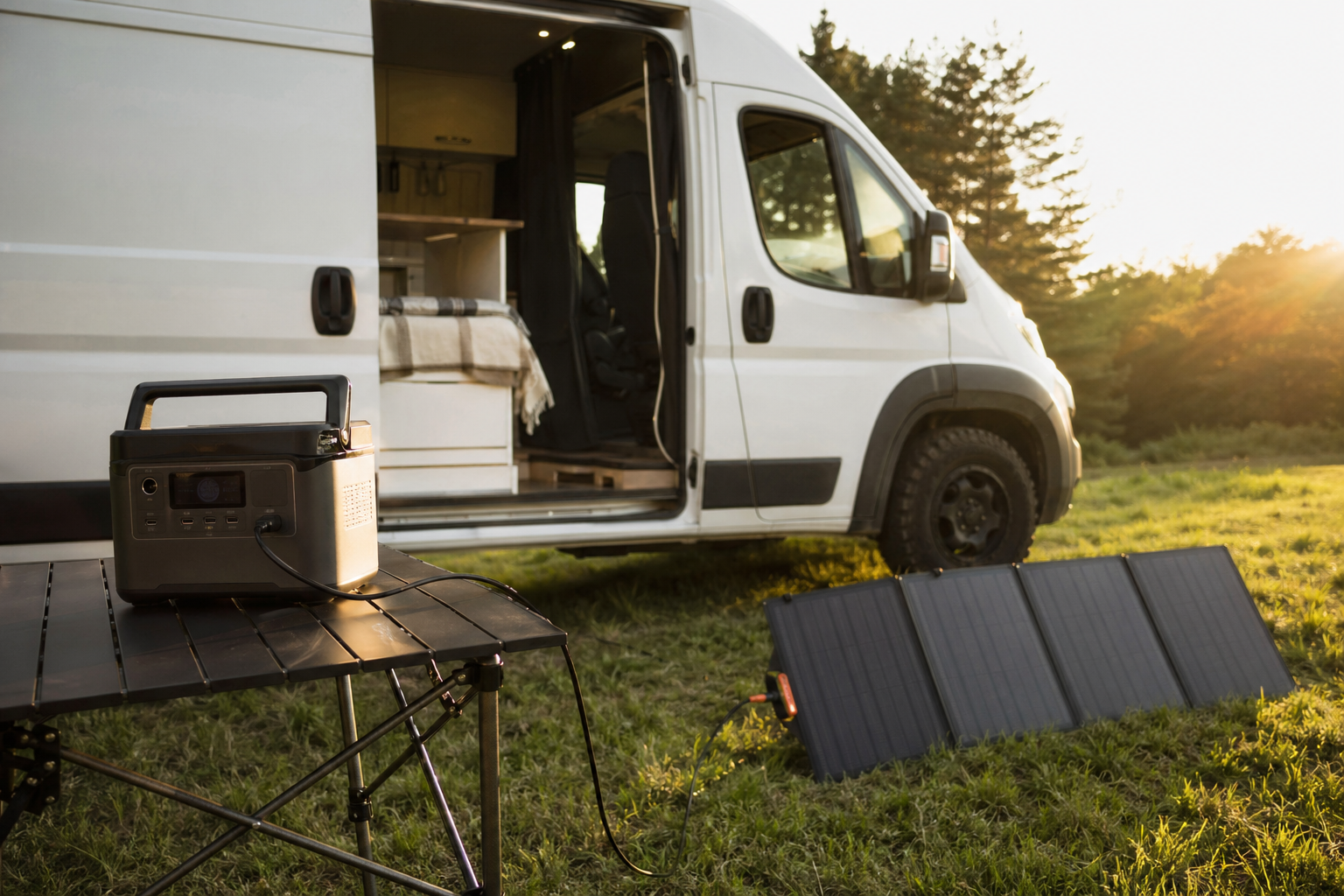
Pick: Jackery Explorer 1000 Portable Power Station — a flexible backup with AC, DC and USB outputs, and solar charging support so it stays useful well beyond the van. Check price →
How to prioritise if you are starting from scratch
If you are building a system from zero, the order I would buy in is: battery, fuse block, DC-DC charger, solar plus MPPT, battery monitor, fridge, inverter, heater, then a portable power station as a final backup. That sequence gives you a working, safe off-grid system early and lets you grow it without ripping anything out.
The components above are not the cheapest options on the market, but they are the ones that get recommended again and again because they last, integrate cleanly, and have proper monitoring built in. A reliable off-grid system is what makes free camping, remote spots, and long stays away from hookups actually relaxing rather than stressful.
For more practical off-grid guides and gear comparisons, browse the off-grid systems section or subscribe to the newsletter.